
How to Visit Little Ashford Without a Car: Bus, Train and Taxi Options Explained
Little Ashford rewards anyone who arrives slowly. Step off the train or the bus and the lane narrows within a minute; two minutes more and you're past the newer houses and into the old part of the village, where the walls are flint and the pavement quietly gives up. These lanes were never built for through traffic, and there's no car park worth circling. Leaving the car at home isn't a compromise here. It's the easier way to spend the day.
What follows is what actually works: the train, the bus, and the taxi you book in advance — plus what to expect on the walk from each stop, and how to get home when the last service has gone.
Check the timetable before you commit
Rural transport is dependable in the sense that it does exactly what the timetable says. The catch is that the timetable changes. Saturdays usually run a reduced service, Sundays are close to hopeless, and bank holidays catch people out every year.
Three things worth doing the night before:
- Check the operator's own timetable rather than a third-party app, which often carries stale times for small villages.
- Look at the last return service first, then work backwards. Plan the day around the journey home, not the journey out.
- If you're arriving after dark, book a taxi as a fallback before you leave the house.
Screenshot everything. Signal in the valley is patchy, and a saved image beats a spinning loading wheel when you're standing at a bus stop wondering whether you've missed it.
Arriving by train
Most visitors come in on the branch line, changing at the junction town and riding the last stretch on a small two- or three-carriage train. That final leg is slow and pretty, and it's the part of the journey people remember.
If you can buy your ticket before boarding, do. Where a station has no machine or open ticket office, tickets are sometimes sold on board — but the rules vary by operator, so check before you travel rather than assuming you can pay on the train.
Walking from the station into the village
Turn right out of the station and follow Station Lane downhill. It curves past a paddock, crosses the brook, and meets the war memorial at the top of the High Street. It's an easy walk of roughly fifteen minutes, though the last stretch has no pavement and narrows where the hedge leans in. Walk single file, keep to the right so you can see oncoming traffic, and step onto the verge when a car comes. With a suitcase it's manageable; with a suitcase and a pushchair, take the taxi.
Getting in by bus
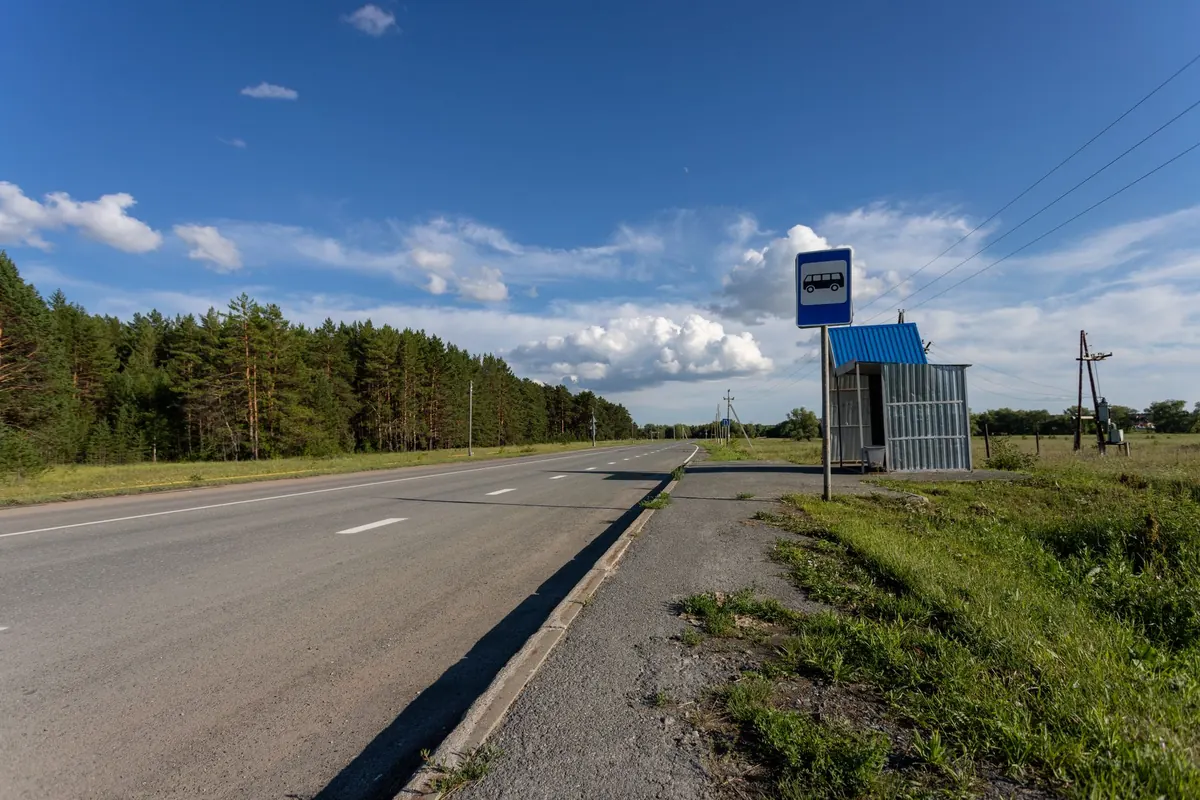
Buses run in from the surrounding market towns and stop in the village itself rather than on a bypass, which is one of the small pleasures of a place this size. Stops are modest — a pole by the green, or a shelter outside the pub with the timetable behind glass.
A few habits make bus travel here much less stressful:
- Put your hand out. In some villages the bus only stops if you clearly signal.
- Tell the driver where you're heading. They know which stop saves you the longest walk and will usually say so.
- Have a card or the right change ready; not every rural service takes contactless.
- Note the stop you arrived at, because you'll want it for the return trip.
Which stop to pick
The Green is the closest to the shop, the church and the tea room. The Cross suits anyone heading straight out onto the footpaths or down to the river. Station Road turn is the one for the railway. If you're unsure, get off at the Green and walk — nothing in the village is more than twenty minutes on foot from there.
Taxis and pre-booked cars
There is no taxi rank. The local firms are small, often two or three cars, and they cover a wide area. That means booking ahead isn't a nicety, it's the whole plan — especially on Friday and Saturday evenings, and during the school run hours when cars are tied up on contracts.
When you ring, give a landmark as well as a postcode: "the pub on the green" gets a driver to you faster than a number. Ask for the fare estimate at the time of booking, and if you're coming by train, tell them which service you're on so they can meet it. Small delays on branch lines are normal; a firm that knows your arrival time will wait a few minutes.
Ride-hailing apps are unreliable out here — you may see no cars at all, or a long wait for one that then cancels. Save the number of a local firm in your phone before you arrive, and confirm your return pickup when you're dropped off, not an hour before you want to leave. Many small operators prefer cash, so it's worth carrying some even if you plan to pay by card.
On foot once you're here
Almost everything worth seeing is walkable, but the walking has character. Lanes are single track with blind bends, so walk facing the traffic and listen as much as you look. Footpaths lead off from the churchyard and from the bridge; the riverside loop is the gentlest option and the one most people manage in ordinary shoes, though after rain it turns muddy in the shaded sections.
Bring a torch in winter. Dusk arrives early, the lanes have no lighting, and a phone torch is a poor substitute when you're also trying to read a map. Close any gate you open, and keep dogs on a lead anywhere there might be livestock.
A car-free day that works
- Arrive on the mid-morning train or bus and walk in through the village rather than straight to your first stop.
- Have lunch in the village and ask whoever serves you for the current bus times — local knowledge beats any app.
- Spend the afternoon on the riverside loop or the footpath up past the church.
- Be back at the Green or the station with time to spare for the afternoon service.
- If you're staying for dinner, book the taxi before you sit down, and confirm the pickup point.
Practical notes before you set off
Charge your phone and save the numbers of one bus operator and one taxi firm. Carry a little cash. Check the weather, because a walk that's pleasant in dry conditions can be miserable in a downpour with no shelter between stops. If you have mobility needs, ring the operator in advance to ask about step-free access and how close the bus can get to where you're going — the lanes and some stops are uneven, and a short call saves a long afternoon.
And build in slack. The one thing that turns a car-free visit sour is a tight connection on a service that runs a few times a day. Give yourself an extra hour, let the timetable set the pace, and the village will do the rest.
Photo: Михаил Крамор / Pexels